There are those rare moments in life when the stars align and everything comes together just right. I experienced one of those moments last week while hosting a workshop at the 2014 ASTD TechKnowledge Conference. Now, some of you may be scratching your heads asking yourselves, "That's great Ken, but what does it have to do with Wish and a Prayer Studios(sm)?" Well, it just so happens my workshop, titled How to Engage Learners with Digital Stories Using Free Tools (FR209CS), was all about using free video/animation production tools to create elements and sometimes whole chunks of learning content.
I have been in the business of video, animation and learning for over twenty-seven years. Back when I first started, everything we produced was interactive video based content. Then came eLearning and video came to a screeching halt. For almost two decades I (and many of you) have waited patiently for the return of video, and more importantly, the return of telling complete stories to support learning, not just chopping information up so it conveniently fits on a PowerPoint slide. The past four years I have been promoting storytelling in my blogs, social networks and making presentations at conferences like the one this past week. This year looks to be the year of the story. Elliot Masie is on board, TED talks set the standard, many corporations have adopted them as part of their marketing strategy, and learning organizations world-wide have recognized the importance of what stories bring to education. In my workshop, I emphasized that stories provide context for learning and in our global markets allow for cost effective creation of progressive, diverse and inclusive narratives using libraries of characters, styles, sets, and multiple languages. All this leads to a need for course developers to be aware of the tools available to bring their own stories to life.
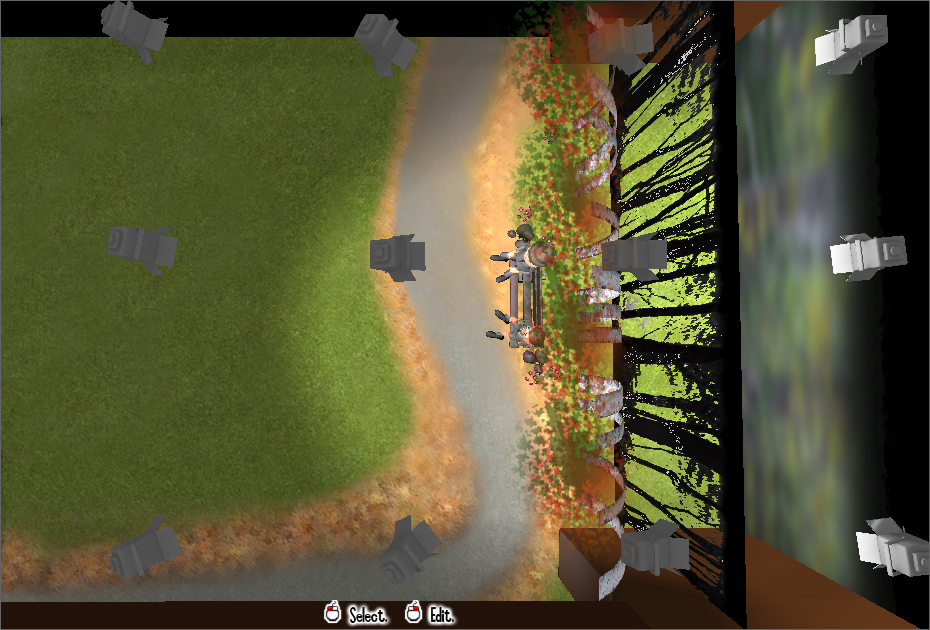
With a packed room of roughly 60 participants, doubled-up on the available workstations, we spent 90 minutes (some are asking for more time next year based on feedback) together. The first third of the session, I introduced a variety of examples of how Celtx (script writing tool), Audacity (audio production tool), PowerPoint, and Muvizu (lip synchronized, character animation tool) can be used together to tell engaging stories for learners of all ages. The second half was all about making the magic happen. Special thanks to all who attended. I walked around after everyone left and saw creativity gone wild on the workstations. Many of you took my brief intro to the tools and really enjoyed playing with the possibilities.
Examples shown during the Workshop:
Introducing Operating Leverage (English) (Chinese) - multilingual
Introducing Operating Leverage (Comic Book version) - reuse of content for low bandwidth audiences
For anyone who missed the conference or are just interested in what I am talking about, here are links to the docs that accompanied the workshop.
Conference Materials:
Slides
Workbook and Job Aids
Tools:
Celtx (script writing tool - download the desktop version for free)
Audacity (audio production tool - opensource)
Muvizu (lip synchronized, character animation tool - free watermark version)
VLC Video Player (video player and single frame capture tool - opensource)
I hope you enjoy using these tools for your own projects. There are other blog entries on this site displaying examples of other uses for these tools. Get creative, make a movie for yourself, with your kids, or for your organization. Most importantly, have fun!
- Ken
Monday, January 27, 2014

Sunday, April 14, 2013

Sunday, August 12, 2012
Succession Entertainment debuts
This week saw the culmination of a summer's worth of writing, mixing and rappin'. Check out the new site and enjoy the music - (Facebook) Succession Entertainment (Web Site) Succession Entertainment
One of the results of a long hard summer, is a dark, dark remix video:
And, here's a fun animated music video we made earlier this summer:
One of the results of a long hard summer, is a dark, dark remix video:
And, here's a fun animated music video we made earlier this summer:
- Ken
Monday, December 26, 2011
It's all about the music (video that is)!
Back in the early 80s (yes, that was in the last century) when MTV was still new and VH1 was its easy listening cousin, I had a dream of being the next great music video producer. Robert Palmer's girls danced across my TV screen and Peter Gabriel was king of music animation. And I recorded hours of videos on VHS tape to watch over and over so I could learn how to make the magic. In the 1990s I helped create the Shockwave 3D authoring studio with NxView and in the first decade of the new century developed automated lip synching applications like MakeBeliever Stanta Clause. Now with the aid of Muvizu (muvizu.com) I have found a way to be the music video producer/director I always wanted to be.
My first video is of Dan-O's "The Art of Gardens." Most of his music is free royalty free at danosongs.com. I really like the variety of music and songs he has on his site for download. I look forward to creating more shorts like this one in the near future.
If you like it, click here to go to YouTube and leave a comment and share with all your friends.
- Ken
My first video is of Dan-O's "The Art of Gardens." Most of his music is free royalty free at danosongs.com. I really like the variety of music and songs he has on his site for download. I look forward to creating more shorts like this one in the near future.
If you like it, click here to go to YouTube and leave a comment and share with all your friends.
- Ken
Sunday, November 27, 2011
Muvizu is taking me back to my roots
I have been officially animating for over thirty-three years now. I started way, way back in the sixth grade under the guidance of the greatest teacher I ever had the pleasure of knowing, Joseph McCoy, in St. Petersburg, Florida. He introduced me to the magic of stop motion animation with a Super 8 camera and a chess board. From those humble beginnings of slaying pawns with cocktail swords weilded by kings and queens I dabbled over the years; experimenting with other forms of stop motion including my own custom video editing rig for doing filmless animation with AT&T Tips for performing real-time optical matting and touch-up.
After graduating from NCSU, I got my first professional gig producing computer animation for EPA training videos in Tampa, Florida. Back then it took hours to render a single frame of animation on equipment costing tens of thousands of dollars. From there I returned back to North Carolina to produce animation for Glaxo Smith Kline sales events, manufacturing animation for Textile/Clothing Technology Corp, and commercial animation for Kerr Drug Stores.
I left broadcast animation and migrated to the exciting world of computer simulation, virtual reality and eLearning for many years, but always maintained a passion for video and animation. Over the past year I have had several opportunities to go back to my roots. My most recent foray was for the Muvizu.com AMD Fusion competition. On a decent laptop with a graphics card and the Muvizu software, I can now produce animation better and cheaper than the old EPA system could have ever dreamed. You can see the end product here.
I see great promise for animation tools like Muvizu in the area of digital storytelling and narrative centered learning. For now, animation will primarily remain a hobby for me. Look for more short films to come.
- Ken
After graduating from NCSU, I got my first professional gig producing computer animation for EPA training videos in Tampa, Florida. Back then it took hours to render a single frame of animation on equipment costing tens of thousands of dollars. From there I returned back to North Carolina to produce animation for Glaxo Smith Kline sales events, manufacturing animation for Textile/Clothing Technology Corp, and commercial animation for Kerr Drug Stores.
I left broadcast animation and migrated to the exciting world of computer simulation, virtual reality and eLearning for many years, but always maintained a passion for video and animation. Over the past year I have had several opportunities to go back to my roots. My most recent foray was for the Muvizu.com AMD Fusion competition. On a decent laptop with a graphics card and the Muvizu software, I can now produce animation better and cheaper than the old EPA system could have ever dreamed. You can see the end product here.
I see great promise for animation tools like Muvizu in the area of digital storytelling and narrative centered learning. For now, animation will primarily remain a hobby for me. Look for more short films to come.
- Ken
Saturday, January 8, 2011
Thanksgiving + Leftover Fireworks + Father and Son = Cool Videos
So my son and I found ourselves with some time to kill over Thanksgiving weekend. And we said, "Hey, there are leftover fireworks from the 4th of July, let's make a movie." And so we did.
Given the fact that mom was home, we promised to be careful, which in retrospect was probably a good idea. So, instead of lighting the fuses directly, I recommended we take a lesson from my old model rocketry days and observations taken from watching Mythbusters. We created a firing board consisting of some large gauge nails, wire, a portable car battery jump starter and homemade rocket igniters (more on this in a minute). The nails served as contacts for triggering each of the igniters to fire when touched by a lead from the battery. What this enabled us to do was run 8 foot leads to each of the fireworks we wanted to explode and trigger one or more in sequence when we wanted from a "safe" distance.
Key to the success of this operation was the homemade rocket igniters. To create these, simply take about 3" of picture hanging wire, create a small loop in the middle, coat the loop with some lacquer nail polish (see mom for this) and let dry. Running current from the jump starter causes the loop to heat up rapidly igniting the lacquer which in turn will ignite the fuse of the fireworks.
The results of this operation can be seen in the videos below. Note, the two videos are the same except for the sound tracks. Izy discovered that you get an entirely different experience based on the music playing during the movie. Enjoy!
- Ken
Given the fact that mom was home, we promised to be careful, which in retrospect was probably a good idea. So, instead of lighting the fuses directly, I recommended we take a lesson from my old model rocketry days and observations taken from watching Mythbusters. We created a firing board consisting of some large gauge nails, wire, a portable car battery jump starter and homemade rocket igniters (more on this in a minute). The nails served as contacts for triggering each of the igniters to fire when touched by a lead from the battery. What this enabled us to do was run 8 foot leads to each of the fireworks we wanted to explode and trigger one or more in sequence when we wanted from a "safe" distance.
Key to the success of this operation was the homemade rocket igniters. To create these, simply take about 3" of picture hanging wire, create a small loop in the middle, coat the loop with some lacquer nail polish (see mom for this) and let dry. Running current from the jump starter causes the loop to heat up rapidly igniting the lacquer which in turn will ignite the fuse of the fireworks.
The results of this operation can be seen in the videos below. Note, the two videos are the same except for the sound tracks. Izy discovered that you get an entirely different experience based on the music playing during the movie. Enjoy!
- Ken
Tuesday, August 3, 2010
Summer Film Festival
When I was thirteen years old the school I attended in Florida had what I would now call the precursor to STEM (science, technology, engineering and math) in the form of the Enhanced learning Program (ELP). It was also known as the nerd class. I had been in ELP since about the third grade. Although the primary focus was identifying gifted and talented students and providing them with additional structured learning like brainstorming, creative design, computers (TRS-80 Model I and later we moved up to an Apple II color), we also got to do film making - in particular, animation!
My son Izy may not have all of the interests I had as a youth, but he does share my passion for film (although his fortunately comes in a digital format and is a lot cheaper than 8 millimeter to produce). As he does not have the benefit of my favorite teacher of all time (Mr. McCoy, I hope you are still with us), I have tried to support his interest and for a couple of summers we have attempted to produce movies. This summer was no exception, and with an empty living room in the apartment in our new town, we had the perfect location for a stop motion animated picture.
For those of you not familiar with the tools and the process, it is actually quite simple. Take a digital camera with manual focus and white balance (this is to keep it from auto adjusting while recording), a tripod (to keep it from shaking between frames), a controlled light source (or sources), and a computer with some kind of video editing software capable of sequencing a series of images (Google the phrase "Monkey Jam Animation" for a free application). The rest is just imagination, something to animate and a lot of time and patience.
Izy came for two whole weeks this summer with no distractions or responsibilities during the day. This left him with all the time necessary to produce some movies; and he did. The first were a little rough. Getting the feel for timing in stop motion is a little tricky at first. We worked in some good old fashioned math, including geometry, and learned how to calculate distance and time and then convert to number of frames between point A and B so that an object seemed to move at the correct pacing. And then, one evening, I came home from work to find he had spent the entire afternoon shooting a car race across the room.
It was awesome! Izy had taken the whole process several leaps beyond the basics we had discussed and figured out how to do camera panning, multiple camera angles, and a car jump. Although I was impressed (especially with the creativity of the different camera angles and the jump) he and I knew it was a little rough in spots. For example, the wheels spun in different directions at times and the distance between frames was erratic. So we sat back and determined that we needed some cues for the wheel spinning which would solve both problems. The spokes of the model cars did the trick. Not only were we able to smooth out the speed of the cars, but we were also able to do some acceleration and deceleration to boot.
The best part of the whole thing was that we did it together. His creativity and imagination were brought to life. Since then he has done a variety of animation styles and is still experimenting. I hope to have the opportunity to continue working with my son and helping him make whatever dreams he has come true.
- Ken
My son Izy may not have all of the interests I had as a youth, but he does share my passion for film (although his fortunately comes in a digital format and is a lot cheaper than 8 millimeter to produce). As he does not have the benefit of my favorite teacher of all time (Mr. McCoy, I hope you are still with us), I have tried to support his interest and for a couple of summers we have attempted to produce movies. This summer was no exception, and with an empty living room in the apartment in our new town, we had the perfect location for a stop motion animated picture.
For those of you not familiar with the tools and the process, it is actually quite simple. Take a digital camera with manual focus and white balance (this is to keep it from auto adjusting while recording), a tripod (to keep it from shaking between frames), a controlled light source (or sources), and a computer with some kind of video editing software capable of sequencing a series of images (Google the phrase "Monkey Jam Animation" for a free application). The rest is just imagination, something to animate and a lot of time and patience.
Izy came for two whole weeks this summer with no distractions or responsibilities during the day. This left him with all the time necessary to produce some movies; and he did. The first were a little rough. Getting the feel for timing in stop motion is a little tricky at first. We worked in some good old fashioned math, including geometry, and learned how to calculate distance and time and then convert to number of frames between point A and B so that an object seemed to move at the correct pacing. And then, one evening, I came home from work to find he had spent the entire afternoon shooting a car race across the room.
It was awesome! Izy had taken the whole process several leaps beyond the basics we had discussed and figured out how to do camera panning, multiple camera angles, and a car jump. Although I was impressed (especially with the creativity of the different camera angles and the jump) he and I knew it was a little rough in spots. For example, the wheels spun in different directions at times and the distance between frames was erratic. So we sat back and determined that we needed some cues for the wheel spinning which would solve both problems. The spokes of the model cars did the trick. Not only were we able to smooth out the speed of the cars, but we were also able to do some acceleration and deceleration to boot.
The best part of the whole thing was that we did it together. His creativity and imagination were brought to life. Since then he has done a variety of animation styles and is still experimenting. I hope to have the opportunity to continue working with my son and helping him make whatever dreams he has come true.
- Ken
Subscribe to:
Posts (Atom)
